 Imagine you can see out into deep space, so far out that the distance to the nearest galaxies is so vast that no stars are visible in any direction, in fact all that there is to see is a solitary blue ball. Consider this ball for a moment and ask yourself this simple question... is it moving, slowly drifting across the abyss or is it holding still, hanging against the backdrop of the void? The more deeply we consider this question the more we come to realize that there is no possible way of knowing the answer. Indeed, in relation to what could it be said to be moving? Things are said to move only when compared with others, that are relatively still, for movement does not exist in itself but only in relation to stillness - likewise stillness cannot exist except in correlation with motion.
So let's have two balls, and notice that they come closer to each other, or get further apart. Sure, there is motion now, but which one is moving? Ball one, ball two, or both? There is no way of deciding. All answers are equally right and wrong. Now suppose that the balls don't move at all, but that the space between them moves. After all, we speak of a distance (space) increasing or decreasing as if it were a thing that could do something. This is the problem of the expanding universe. Are the other galaxies moving away from ours, or ours from them, or all from each other? The problem comes up because we ask the question in the wrong way. We supposed that solids were one thing and space quite another, or just nothing whatever. Then it appeared that space was no mere nothing, because solids couldn't do without it. But the mistake in the beginning was to think of solids and space as two different things, instead of as two aspects of the same thing. The point is that they are different but inseparable, like the front end and the rear end of a cat.
The space, then, is as real as the solid. Yet we think, 'Well, where there is a solid, there is something, and where there is space, there is nothing.' They are actually as mutually supportive as back and front, they are inseparable. Nobody ever found a space without a solid, and nobody ever found a solid without a space. We've been trained to fix our attention on the solid and disregard the space, but what we fail to see is that it is the solid which implies the space, just as it is the space which implies the solid. It is the soft of your skin that implies the rough of the tree bark, it is the warmth of your body that implies the cold of the snow. Nothing can exist except in relation to it's opposite... it is only through the concept of dark that we can conceive of light, and it is only in relation to light that we can comprehend dark. Press a single key on a piano and we perceive a solitary note hanging in the air, but what our ear fails to tell us is that every second this note is flowing rapidly in and out of existence. In fact, were this not the case we would fail to hear anything at all. This is because sound is generated not by a tone but by a tone, followed by silence, followed by a tone, followed by silence. Likewise when you switch on a light in the dark you senses are flooded with the perception of light, but in reality your eyes are following your ears' example and withholding the fact that what you perceive as a beam of brightness is actually a union of darkness and light; the light dying away to bring life to the dark, the darkness giving way to the light which implies the darkness in turn. How do would we classify the rich without the poor? Sorrow without joy? If everyone was exactly the same size who would we consider tall? Whom short? If all of humanity were as intelligent as Einstein would we still consider him a genius? We never find the crest of a wave without an accompanying trough, nor a particle without an interval between itself and others. In others words, there is no such thing as a half wave, or a particle all by itself without any space around it. There is no on without off, no up without down. Take away the crest of the wave, and there is no trough.
 We are so absorbed in conscious attention, so convinced that this narrowed kind of perception is not only the real way of seeing the world, but also the very basic sensation of oneself as a conscious being, that we are fully hypnotized by its disjointed vision of the universe. We really feel that this world is indeed an assemblage of separate things that have somehow come together or, perhaps, fallen apart, and that we are each only one of them. We see ourselves all alone, born alone and dying alone, maybe as bits and fragments of a universal whole, or expendable parts of a big machine. Rarely do we conceive of all these so-called things and events "going together" like the head and tail of the cat, or as tones and inflections - rising and falling, coming and going - of a single singing voice.
In other words, we do not play the game of death-and-life: the universal game of up/down, on/off. solid/space, and each/all. Instead, we play the game of death-versus-life. Then, not realizing the inseparability of the positive and negative poles of the rhythm, we are afraid that death may win the game. But the game "Life must win" is no longer a game, it is a fight - a fight haunted by a sense of chronic frustration because we are doing something as crazy as trying to keep the mountains and get rid of the valleys.
Thursday, December 16, 2010
Yin Yang
Tuesday, December 7, 2010
Snowflakes
 There was a Zen Master who was very pure, very illumined. Near the place where he lived there happened to be a food store. The owner of the food store had a beautiful unmarried daughter. One day she was found with child. Her parents flew into a rage. They wanted to know the father, but she would not give them the name. After repeated scolding and harassment, she gave up and told them it was the Zen Master. The parents believed her. When the child was born they ran to the Zen Master, scolding him with foul tongue, and they left the infant with him. The Zen Master said, “Is that so.” This was his only comment.
He accepted the child. He started nourishing and taking care of the child. By this time his reputation had come to an end, and he was an object of mockery. Days ran into weeks, weeks into months and months into years. But there is something called conscience in our human life, and the young girl was tortured by her conscience. One day she finally disclosed to her parents the name of the child’s real father, a man who worked in a fish market. The parents again flew into a rage. At the same time, sorrow and humiliation tortured the household. They came running to the spiritual Master, begged his pardon, narrated the whole story and then took the child back.”
His only comment: “Is that so.”
Nonresistance

“Maybe,” the farmer replied.
The next morning the horse returned, bringing with it three other wild horses. “How wonderful,” the neighbors exclaimed.
“Maybe,” replied the old man.
The following day, his son tried to ride one of the untamed horses, was thrown, and broke his leg. The neighbors again came to offer their sympathy on his misfortune.
“Maybe,” answered the farmer.
The day after, military officials came to the village to draft young men into the army. Seeing that the son’s leg was broken, they passed him by. The neighbors congratulated the farmer on how well things had turned out. “Maybe,” said the farmer.
The wise man said, " I may be able to help you. But the price is so great that your entire kingdom would not be sufficient payment for it. Therefore it will be a gift to you if you will honor it." The king gave his assurances and the wise man left.
A few weeks later, he returned and handed the king an ornate box carved with jade. The king opened the box and found a simple gold ring inside. Some letters were inscribed on the ring. The inscription read: This, too, will pass. "What is the meaning of this?" asked the king. The wise man said, "Wear this ring always. Whatever happens, before you call it good or bad, touch this ring and read the inscription. That way, you will always be at peace."

Sunday, November 21, 2010
Here Is Now
 Hakuna matata is a Swahili phrase that is literally translated as "There are no worries", in the words of the lovable meerkat Timon this means "Put your past behind you". Simple enough words for a task that most of humanity never really accomplishes in their entire lifetime. Who among us does not carry with us the baggage that our parents heaped upon us by raising us in inherently flawed manners, though who can really blame them when they themselves spent their lives coping with the issues handed down to them by their own parents? What small percentage of people have walked away from ex-husbands and wives, even ex-boyfriends and girlfriends, without an entire repertoire of battle-scars on their souls? Sibling rivalries, bullying received during our school years, a plethora of injustices met out in the 'real world', each and every one of us are bound with iron chains to the weight of decades worth of baggage.
Yet, what is the past, really? Beyond a hodgepodge of selective memories strung together to form a loose, hopelessly inaccurate and ultimately delusional narrative - one formed under the thinly veiled notion of an excuse for our behaviors in the present moment. And how much of our personal history, when it really comes down to it, do we hold even a modicum of influence over at any given moment? On the flip side of the same coin we have the illusion of a history yet to be written. Would Timon's words be any less wise if we turned them around to say "Keep your future out ahead of you" or in other words "Cross that bridge when you come to it"? We all walk through life with our head stuck in the clouds, gazing out at a mirage that we perceive to be the horizon. To countless among us thoughts such as 'After a few more paychecks...', 'Starting next week...', 'Once
On a less dramatic scale we can see this same problem when two people are deep in conversation. With rare exceptions the person who is listening at any given moment is concentrating not on the words they hear, nor on their meaning to the speaker, not even on the speaker them-self; instead their attention is focused on formulating their next reply. Although our present actions may well influence the shape the future will take, what power do we really have over something which does not yet exist? Little more than a dream, we hold more power over the flight path of a butterfly in Tibet.
Yet the present itself is a fleeting notion, it is something that can only be discussed in the abstract for the moment we begin to discuss it the moment has already slipped beyond the cusp of the present and into the past. Like a rock in a riverbed we must allow time to flow over and around us, making no attempt at grasping and holding to anything that happens. In the words of Sylvia Boorstein, "
Thursday, November 18, 2010
I Am...
 Buddhism teaches that the origin of all suffering is attachment. Craving and clinging are natural reactions to life; we cling to our possessions and our wealth, we crave attention and affection, we attach ourselves to our loved ones and to our lives. Yet the objects of our attachment are transient, their loss is inevitable, thus suffering will necessarily follow. You pine for the love of someone, if your love is unrequited you naturally become sad or frustrated. Suppose, instead, you come to find that certain someone loves you too. The moment you share your love for one another, the moment that by all rights and reasons should be unmitigated joy, some part of you shifts to a fearful, defensive posture. What if they should stop loving you, move away or even die? In that instant that we attain that which we have been craving we begin to cling to it for dear life.
 Arguably the most difficult things for us to learn to sever our detachments from are not our cars and houses, not our bank accounts, not even our loved ones... that which we grasp onto most tightly is our paradigms. The image we carry of ourselves, the lens through which we see the world, the guide by which we interpret our lives are often so ingrained, so intrinsically a part of who we are that we shrink in terror from the loss of them. We allow our beliefs, opinions and conceptions to shape our lives at such a fundamental level that many of us actually identify with them. Strip away our politics, our religion, our day-to-day world views and many of us don't even have a concept of what 'self' would be leftover.
 The source of these deeply enmeshed attachments stem from an attachment to our thoughts. We suffer from the belief that whatever pops into our mind is part of who and what we are, thus we cling to the random wanderings of our brain under the delusion that our thoughts are as much a part of us as our own skin. I am learning to see my thoughts and emotions like clouds, there to be observed and considered but lacking any personal attachment, drifting across the sky of my mind leaving no trace of their passing. By identifying ourselves with our own attachments we tie our mental and emotional well-being to a vulnerable, false 'self'. This is why people become so defensive of their paradigms, what we feel as an attack on our core beliefs is seen as an attack on our very selves. To question someone's political stance or religion, for example, is perceived on par with coming at them with a knife, an attempt to cut away a part of themselves.
 This simple, terrible truth is at the heart of the conflict between conservatives and liberals, Christians and Muslims, Capitalists and Socialists, husbands and wives, parents and children, friends and neighbors. It plays a core role in humanity's destruction of the environment, the exploitation and enslavement of one person by another and virtually every war ever waged in human history. These attachments are, quite literally, the fountain from which all suffering springs, thus it is only by finding these intrinsic attachments within ourselves and confronting them head on that we, both individually and collectively, will ever escape the vicious cycle of misery that binds humanity in a prison of our self-deluded creation.
A Rewriting Of History
 The past is a pliable myth and the future is merely an illusion, the present moment is all that exists.
 That the future is an illusion has always seemed logical enough, no matter what expectations I have or plans I make today I have no inkling of what tomorrow will bring, or the next moment for that matter. There are no guarantees that I will even live to see the sun set on this day. Likewise, it seems natural to say that the only moment truly in existence is the here and now, it is this moment alone that I can have a direct influence over, the only moment that truly matters is the present one. Just as it makes perfect sense that the future has not yet been called into existence one can come to accept that the past has slipped irrevocably beyond our reach, but I admit that I have always struggled with the conception of a malleable past.
A zen master once said "We must reverse our thinking and see that the past always flows back from the present, That now is the creative point of life." This flies in the face of the Western linear view of time in which the present moment is the direct and literal culmination of every moment that preceded it. And while it is one thing to recognize the limitations imposed by this conception, it is something else entirely to shift our paradigms altogether. How can the present moment possibly effect the past when it is a myth, even less accessible to us than Jupiter's 63rd moon?
Yet this is precisely what happens when we speak to one another, you wait until later to find out the meaning of a sentence. Suppose we cross paths, I speak first and the first words that reaches your ears are 'I love'... At this point you have no way of knowing whether I am going to confess my undying love for you or simply share the fact that I enjoy running into you this way. It is only later, when I finish my sentence, that these words are retroactively imbued with meaning. Similarly, when we listen to the flow of music the expression of the melody early in the song is changed by the notes that come after. To take this concept a step further, this same phenomenon is precisely what takes place when you forgive someone who has wronged you. With no more effort than thinking, by merely making a decision, you have radically altered the meaning of the past, entire years worth of history are changed the moment your heart is.
Monday, November 8, 2010
24 Hours Of Silence
 If you get with yourself and you find out that you are all of yourself a very strange thing happens. You find out that your body knows that you are one with the universe, in other words that the so called involuntary circulation of your blood is one continuous process with the stars shining. If you find out that it's you who circulates your blood you at the same moment find out that you are shining the sun.
I entered a void, I left my body, I was above everything, a wormhole, a spiral, a light, I was consciousness, I was wisdom. I was myself, looking at myself. A wave and a particle. I am the universe and the universe is me.
 I don't know who I am unless I know who you are, and you don't know who you are unless you know who I am. A wise rabbi once said "If I am I because you are you and you are you because I am I, then I am not I and you are not you." In other words we are not separate, we define each other, we are all backs and fronts to each other.
There was a young man who said "Though it seems I know that I know, what I would like to see is the eye that knows me when I know that I know that I know."
 We are symptomatic of the scheme of things, as the apple is symptomatic of the apple tree and the rose is symptomatic of the rose bush. The earth is not a big rock infested with living organisms anymore than your skeleton is bones infested with cells. The earth is geological, yes, but this geological entity grows people and our existence on the earth is a symptom of the solar system and its balances, as much as the solar system in turn is a symptom of our galaxy.
I am everything and nothing, I don't end at my skin.
Recursive, holographic, isomorphic.
 Your body is a miracle of harmony. Even the corpuscles and creatures that are fighting each other in the bloodstream and eating each other up, if they weren't doing that you wouldn't be healthy. What is discord at one level of your being is harmony at a higher level, similarly the discords of your life and the discords of people's lives which are a fight at one level at a higher level of the universe are healthy and harmonious. And you suddenly realize that everything that you are and do is, at that level, as magnificent and as free of any blemish as the patterns in waves, the markings in marble, the way a cat moves and that this world is really okay.
The rounded world is fair to see,
Nine time folded in mystery:
Though baffled seers cannot impart
The secret of its laboring heart,
Throb thine with Nature’s throbbing breast,
And all is clear from east to west,
Spirit that lurks each form within
Beckons to spirit of its kin;
Self-kindled every atom glows,
And hints the future which it owes.
 You may become the Buddha as soon as you know that you have always been the Buddha.
Tuesday, November 2, 2010
Feeling Loudly
Friday, September 24, 2010
Antigone
 Sophocles’ Antigone is a beautifully written Greek tragedy that has long captured the attention of philosophers and revolutionaries alike. It is a story of conflicting orders of values, of radical divisions and of opposition between family and state, men and women, ethics and politics, individuality and collectivism and religion and law.
In this play Antigone, the unflinching and uncompromising heroin, defies an ordinance issued by the King of Thebes (Creon) to let her slain brothers body rot and deteriorate above ground without a proper burial because of his betrayal of the city of Thebes. Antigone defies the king and buries her brother citing her duty to her family and to divine law.
"I intend to give my brother burial. I'll be glad to die in the attempt, if it's a crime, then it's a crime that God commands." Antigone feels no remorse for her actions and refuses repentance, thereby inflaming the king who quickly decries:
“Show me a greater crime in all earth!
She, she destroys cities, rips up houses,
Breaks the ranks of spearmen into headlong rout.
But the ones who last it out, the great mass of them
Owe their lives to discipline. Therefore
We must defend the men who live by law,
Never let some woman triumph over us.
Better to fall from power, if fall we must,
At the hands of a man—never be rated
Inferior to a woman, never.”
Antigone’s sprit of defiance has long been heralded by feminists as a noble and revolutionary act in which Antigone stands in opposition to Creon in what seems to be an irreconcilable debate, Antigone becoming the embodiment of moral idealism and individuality and Creon political realism and collectivism. Antigone espouses the ability to use social rebellion and civil disobedience to destabilize a society and traditional gender roles. As the story unfolds, Antigone exposes the falsities and failures of such oppositions and seeks to reveal and break down such false dichotomies as man and woman, individualism and collectivism and morality and law, showing a radical transcendence of an outsider living in a patriarchal society.
“I didn't say yes. I can say no to anything I say vile, and I don't have to count the cost. But because you said yes, all that you can do, for all your crown and your trappings, and your guards—all that your can do is to have me killed.”
Thursday, September 23, 2010
The Declaration of Evolution
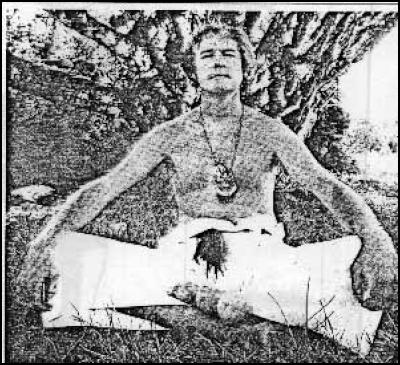
When in the course of organic evolution it becomes obvious that a mutational process is inevitably dissolving the physical and neurological bonds which connect the members of one generation to the past and inevitably directing them to assume among the species of Earth the separate and equal station to which the Laws of Nature and Nature's God entitle them, a decent concern for the harmony of species requires that the causes of the mutation should be declared.
We hold these truths to be self evident:
- That all species are created different but equal;
- That they are endowed, each one, with certain inalienable rights;
- That among them are Freedom to Live, Freedom to Grow, and Freedom to pursue Happiness in their own style;
- That to protect these God-given rights, social structures naturally emerge, basing their authority on the principles of love of God and respect for all forms of life;
- That whenever any form of government becomes destructive of life, liberty, and harmony, it is the organic duty of the young members of that species to mutate, to drop out, to initiate a new social structure, laying its foundations on such principles and organizing its power in such form as seems likely to produce the safety, happiness, and harmony of all sentient beings.

But when a long train of abuses and usurpation's, all pursuing invariably the same destructive goals, threaten the very fabric of organic life and the serene harmony of the planet, it is the right, it is the organic duty to drop out of such morbid covenants and to evolve new loving social structures.
Such has been the patient sufferance of the freedom-loving peoples of this earth, and such is now the necessity which constrains us to form new systems of government.
The history of the white, menopausal, mendacious men now ruling the planet earth is a history of repeated violation of the harmonious laws of nature, all having the direct object of establishing a tyranny of the materialistic aging over the gentle, the peace-loving, the young, the colored. To prove this, let Facts be submitted to the judgment of generations to come.

- These old, white rulers have maintained a continuous war against other species of life, enslaving and destroying at whim fowl, fish, animals and spreading a lethal carpet of concrete and metal over the soft body of earth.
- They have maintained as well a continual state of war among themselves and against the colored races, the freedom-loving, the gentle, the young. Genocide is their habit.
- They have instituted artificial scarcities, denying peaceful folk the natural inheritance of earth's abundance and God's endowment.
- They have glorified material values and degraded the spiritual.
- They have claimed private, personal ownership of God's land, driving by force of arms the gentle from passage on the earth.
- In their greed they have erected artificial immigration and customs barriers, preventing the free movement of people.
- In their lust for control they have set up systems of compulsory education to coerce the minds of the children and to destroy the wisdom and innocence of the playful young.
- In their lust for power they have controlled all means of communication to prevent the free flow of ideas and to block loving exchanges among the gentle.
- In their fear they have instituted great armies of secret police to spy upon the privacy of the pacific.
- In their anger they have coerced the peaceful young against their will to join their armies and to wage murderous wars against the young and gentle of other countries.
- In their greed they have made the manufacture and selling of weapons the basis of their economies.
- For profit they have polluted the air, the rivers, the seas.
- In their impotence they have glorified murder, violence, and unnatural sex in their mass media.
- In their aging greed they have set up an economic system which favors age over youth.
- They have in every way attempted to impose a robot uniformity and to crush variety, individuality, and independence of thought.
- In their greed, they have instituted political systems which perpetuate rule by the aging and force youth to choose between plastic conformity or despairing alienation.
- They have invaded privacy by illegal search, unwarranted arrest, and contemptuous harassment.
- They have enlisted an army of informers.
- In their greed they sponsor the consumption of deadly tars and sugars and employ cruel and unusual punishment of the possession of life-giving alkaloids and acids.
- They never admit a mistake. They unceasingly trumpet the virtue of greed and war. In their advertising and in their manipulation of information they make a fetish out of blatant falsity and pious self-enhancement. Their obvious errors only stimulate them to greater error and noisier self-approval.

- They are bores.
- They hate beauty.
- They hate sex.
- They hate life.
We must therefore acquiesce to genetic necessity, detach ourselves from their uncaring madness and hold them henceforth as we hold the rest of God's creatures - in harmony, life brothers, in their excess, menaces to life.
We, therefore, God-loving, peace-loving, life-loving, fun-loving men and women, appealing to the Supreme Judge of the Universe for the rectitude of our intentions, do, in the name and by the Authority of all sentient beings who seek gently to evolve on this planet, solemnly publish and declare that we are free and independent, and that we are absolved from all Allegiance to the United States Government and all governments controlled by the menopausal, and that grouping ourselves into tribes of like-minded fellows, we claim full power to live and move on the land, obtain sustenance with our own hands and minds in the style which seems sacred and holy to us, and to do all Acts and Things which independent Freemen and Freewomen may of right do without infringing on the same rights of other species and groups to do their own thing.
And for the support of this Declaration of Evolution with a firm reliance on the protection of Divine Providence, and serenely confident of the approval of generations to come, in whose name we speak, do we now mutually pledge to each other our Lives, our Fortunes, and our Sacred Honor.

Friday, September 17, 2010
Culture is your Operating System
Tuesday, September 7, 2010
A Holographic Universe
 We now know that under certain circumstances subatomic particles, such as electrons, are capable of instantaneously communicating with one another other regardless of the distance separating them. They can be 5 miles or 5 billion miles apart, it doesn’t matter. Each particle always knows what the others are doing. This perfect synchronicity violates Einstein's theory that no communication can travel faster than the speed of light and has left many scientists questioning their most basic understanding of the universe.
University of London physicist David Bohm has taken these findings and along with his own research has come to believe that objective reality does not exist. That despite its apparent solidity the universe is, at heart, a gigantic and splendidly detailed hologram. And holograms have some incredible characteristics. If a hologram of a daisy is cut in half and then illuminated by a laser, each half will still be found to contain the entire image of the daisy, every part of a hologram contains all the information possessed by the whole. Western science has long believed that the best way to understand a physical phenomenon, whether a frog or an atom, is to dissect it and study its respective parts. A hologram teaches us that some things in the universe may not lend themselves to this approach. If we try to take apart something constructed holographically, we will not get the pieces of which it is made, only smaller wholes. Bohm believes the reason subatomic particles are able to remain in contact with one another regardless of the distance separating them is because their separateness is an illusion. He argues that at some deeper level of reality such particles are not individual entities, but are actually extensions of the same fundamental something. Bohm says that we view objects such as subatomic particles as separate from one another because we are seeing only a portion of their reality. They are facets of a deeper and more underlying unity. Since everything in physical reality is comprised of these "eidolons" the universe is itself a projection, a hologram.
If the apparent separateness of subatomic particles is illusory, it means that at a deeper level of reality all things in the universe are infinitely interconnected. The electrons in a carbon atom in the human brain are connected to the subatomic particles that comprise every salmon that swims, every heart that beats, and every star that shimmers in the sky. Everything interpenetrates everything, and although human nature may seek to categorize and pigeonhole and subdivide, the various phenomena of the universe, all apportionments are of necessity artificial and all of nature is ultimately a seamless web. In a holographic universe even time and space could no longer be viewed as fundamentals. Concepts such as location break down in a universe in which nothing is truly separate from anything else. At its deeper level reality is a sort of superhologram in which the past, present, and future all exist simultaneously.
Stanford neurophysiologist Karl Pribram has also become persuaded of the holographic nature of reality. Pribram was drawn to the holographic model by the puzzle of how and where memories are stored in the brain. For decades numerous studies have shown that rather than being confined to a specific location, memories are dispersed throughout the brain. Pribram believes memories are encoded not in neurons, or small groupings of neurons, but in patterns of nerve impulses that crisscross the entire brain in the same way that patterns of laser light interference crisscross the entire area of a piece of film containing a holographic image. In other words, Pribram believes the brain is itself a hologram. The hologram theory explains how the human brain can store so many memories in so little space. It has been estimated that the human brain has the capacity to memorize something on the order of 10 billion bits of information during the average human lifetime. Holograms possess an astounding capacity for information storage, simply by changing the angle at which the two lasers strike a piece of photographic film; it is possible to record many different images on the same surface. It has been demonstrated that one cubic centimeter of film can hold as many as 10 billion bits of information. And one of the most amazing things about the human thinking process is that every piece of information seems instantly cross- correlated with every other piece of information, another feature intrinsic to the hologram. Because every portion of a hologram is infinitely interconnected with every other portion, it is perhaps nature's supreme example of a cross-correlated system. Pribram believes the brain also comprises a lens and uses holographic principles to mathematically convert the frequencies it receives through the senses into the inner world of our perceptions.
So if the concreteness of the world is but a secondary reality and what is "there" is actually a holographic blur of frequencies, and if the brain is also a hologram and only selects some of the frequencies out of this blur and mathematically transforms them into sensory perceptions, what becomes of objective reality? Put quite simply, it ceases to exist. As the religions of the East have long upheld, the material world is an illusion, and although we may think we are physical beings moving through a physical world, this too is an illusion. We are really "receivers" floating through a kaleidoscopic sea of frequency, and what we extract from this sea and transmogrify into physical reality is but one channel from many extracted out of the superhologram. In a universe in which individual brains are actually indivisible portions of the greater hologram and everything is infinitely interconnected, the collective unconscious, out of body experiences, precognitive glimpses of the future, and regression into apparent past life incarnations don’t seem so unbelievable. If the mind is actually part of a continuum, a labyrinth that is connected not only to every other mind that exists or has existed, but to every atom, organism, and region in the vastness of space and time itself, the fact that it is able to occasionally make forays into the labyrinth and have transpersonal experiences no longer seems so strange.
And if the concreteness of reality is but a holographic illusion, it would no longer be true to say the brain produces consciousness. Rather, it is consciousness that creates the appearance of the brain -- as well as the body and everything else around us we interpret as physical. Maybe “reality” is nothing more than a consensus among humanity, formulated and ratified at the level of the human unconscious at which all minds are infinitely interconnected. If this is true, it is the most profound implication of the holographic paradigm of all, for it means that there are no limits to the extent to which we can alter the fabric of reality. What we perceive as reality is only a canvas waiting for us to draw upon it any picture we desire.

Friday, July 2, 2010
Home
 From this distant vantage point, the Earth might not seem of particular interest. But for us, it's different. Consider again that dot. That's here, that's home, that's us. On it everyone you love, everyone you know, everyone you ever heard of, every human being who ever was, lived out their lives. The aggregate of our joy and suffering, thousands of confident religions, ideologies, and economic doctrines, every hunter and forager, every hero and coward, every creator and destroyer of civilization, every king and peasant, every young couple in love, every mother and father, hopeful child, inventor and explorer, every teacher of morals, every corrupt politician, every "superstar," every "supreme leader," every saint and sinner in the history of our species lived there – on a mote of dust suspended in a sunbeam.
The Earth is a very small stage in a vast cosmic arena. Think of the rivers of blood spilled by all those generals and emperors so that, in glory and triumph, they could become the momentary masters of a fraction of a dot. Think of the endless cruelties visited by the inhabitants of one corner of this pixel on the scarcely distinguishable inhabitants of some other corner, how frequent their misunderstandings, how eager they are to kill one another, how fervent their hatreds. Our posturings, our imagined self-importance, the delusion that we have some privileged position in the Universe, are challenged by this point of pale light. Our planet is a lonely speck in the great enveloping cosmic dark. In our obscurity, in all this vastness, there is no hint that help will come from elsewhere to save us from ourselves.
The Earth is the only world known so far to harbor life. There is nowhere else, at least in the near future, to which our species could migrate. Visit, yes. Settle, not yet. Like it or not, for the moment the Earth is where we make our stand.
It has been said that astronomy is a humbling and character-building experience. There is perhaps no better demonstration of the folly of human conceits than this distant image of our tiny world. To me, it underscores our responsibility to deal more kindly with one another, and to preserve and cherish the pale blue dot, the only home we've ever known. ~ Carl Sagan 
Thursday, July 1, 2010
Scales
 Reality exists on all scales at all times, from the subatomic levels to the galactic, even universal levels. Likewise we exist on all scales at all times, we are pieces of the cohesive whole that is existence, it is only our ignorance and a dependence on our finite senses that keep us shrouded behind a veil of illusion. This shroud over our minds is more ephemeral than smoke but can be absolutely opaque, keeping us ignorant of the true nature of our existence.
In much the same way that the philosophy of cyclic existence can be seen as a metaphor for the various states of mind that humans live their lives in, this multitude of scales ranging from the cosmic to the quantum can help us to understand the multileveled nature of consciousness. Just as I can focus my attention on the very real conception of my body as a collection of cells, molecules, or even atoms or my existence within the bigger picture of our earth, solar system or galaxy - all exiting simultaneously, so too can I direct my mind to varying levels of consciousness from being hyper-focused internally on my body or upon my surroundings, to daydreaming about the future and calling up memories of the past, from the foggy semi-attention that we spend the majority of our lives living in to the deepest meditative levels at which we become aware of the interconnectedness of all things.
Meditation is not a process that connects us to certain object like two cords being plugged into one another, we are always connected to things, to everything, at all times. Meditation merely allows us to access the levels of consciousness necessary to recognize this scale, the truest plane of existence. Like virtually anything we do in life, this process can becomes easier to complete through patient practice of meditation. This enlightenment through practice can be seen as another analogy, this one of the gradual enlightenment we each work to attain as we move across time, from one life to the next. Perhaps this is why humankind is living in an unprecedented state of enlightenment, technology, and social liberalism, we are carried forward as each new generation is born, slightly more enlightened than the one before.
Monday, June 21, 2010
The Space Between...
 The creative process, so far as we are able to follow it at all, consists in the unconscious activation of an archetypal image and elaborating and shaping the image into the finished work. By giving it shape, the artist translates it into the language of the present and so makes it possible for us to find our way back to the deepest springs of life." - Carl Jung
From the Dada activities of World War I, Surrealism was formed. The cultural hub of the movement was Paris in the 1920s, but it's influence quickly spread around the globe. Poet and critic André Breton has long been considered the major spokesman for the Surrealism movement. In his 1924 work "The Surrealist Manifesto" Breton proclaimed that Surrealism was a means of reuniting conscious and unconscious realms of experience so completely, that the world of dream and fantasy would be joined to the everyday rational world in "an absolute reality, a surreality."
 Joan Miro , a Spanish artist is recognized as one of the most important of the Surrealists. He created fantasy worlds that lacked realism and challenged reason, as in" Hirondelle Amour", 1933-34, oil on canvas. Notice the elements of surprise, unexpected juxtapositions and non sequitur.
 Another artist who painted in the surrealist style was the Belgian painter Rene' Magritte. Her paintings force the viewer to reconsider what is real and what is not, for example the "Les Promendades d' Euclide ", 1955, oil on canvas. The work seems to show a room with a painting mounted on an easel. A window just behind the easel displays a view of a city. Yet a longer look raises a question Is the object on the easel really a painting or the scene behind it? Why is the shape of the tower identical to that of the street? Magritte offers no answers to these questions but instead, leaves us to ponder a picture that makes as much sense as a dream. Surrealism created new styles and techniques that inspired artists to go beyond their dreams with new ideas, new creations and a new world.
 Surrealist writers and artists wanted to drive out reason, they were looking for states in which what is deep down in our minds may come to surface. I love the strange confusion between dream and reality, I call this place home, it is freedom in its truest form. I believe in the reality of our dreams and yes Dali... you read my mind.
Saturday, May 29, 2010
The Prince of Pop
 When I got my first television set, I stopped caring so much about having close relationships.
They always say time changes things, but you actually have to change them yourself.
I think having land and not ruining it is the most beautiful art that anybody could ever want to own.
I suppose I have a really loose interpretation of "work," because I think that just being alive is so much work at something you don't always want to do. The machinery is always going. Even when you sleep.
I try to think of what time is and all I can think is.... Time is, time was. I never understood why when you died, you didn't just vanish, everything could just keep going on the way it was only you just wouldn't be there. I always thought I'd like my own tombstone to be blank. No epitaph, and no name. Well, actually, I'd like it to say 'figment.'
I like boring things.
I have Social Disease. I have to go out every night. If I stay home one night I start spreading rumors to my dogs.
Fantasy love is much better than reality love. Never doing it is very exciting.
Love and sex can go together and sex and unlove can go together and love and unsex can go together. But personal love and personal sex is bad. Everyone will be famous for 15 minutes.
Dying is the most embarrassing thing that can ever happen to you, because someone's got to take care of all your details.
The symptom of love is when some of the chemicals inside you go bad. So there must be something in love because your chemicals do tell you something.
During the 1960s, I think, people forgot what emotions were supposed to be. And I don't think they've ever remembered.
Don't pay any attention to what they write about you. Just measure it in inches. I used to think that everything was just being funny but now I don't know. I mean, how can you tell?
Everybody has a different idea of love. One girl I know said, "I knew he loved me when he didn't come in my mouth."
I'm afraid that if you look at a thing long enough, it loses all of its meaning.
I'm the type who'd be happy not going anywhere as long as I was sure I knew exactly what was happening at the places I wasn't going to. I'm the type who'd like to sit home and watch every party that I'm invited to on a monitor in my bedroom.
I've decided something: Commercial things really do stink. As soon as it becomes commercial for a mass market it really stinks. If you want to know all about Andy Warhol, just look at the surface of my paintings and films and me, and there I am. There's nothing behind it.
Some people, even intelligent people, say that violence can be beautiful. I can't understand that, because beautiful is some moments, and for me those moments are never violent.
Isn't life a series of images that change as they repeat themselves?
It's the movies that have really been running things in America ever since they were invented. They show you what to do, how to do it, when to do it, how to feel about it, and how to look, how you feel about it.
America is really The Beautiful. But it would be more beautiful if everybody had enough money to live. Once you 'got' Pop, you could never see a sign again the same way again. And once you thought Pop, you could never see America the same way again.
People need to be made more aware of the need to work at learning how to live because life is so quick and sometimes it goes away too quickly.
Death, I don't believe in it, because you're not around to know that it's happened. I can't say anything about it because I'm not prepared for it.
Sex is more exciting on the screen and between the pages than between the sheets.
The most exciting attractions are between two opposites that never meet. The most exciting thing is not doing it. If you fall in love with someone and never do it, it's much more exciting.
Being born is like being kidnapped. And then sold into slavery.
In the 60's everybody got interested in everybody else.
Since people are going to be living longer and getting older, they'll just have to learn how to be babies longer.
People should fall in love with their eyes closed. Just close your eyes. Don't look.


